Mesoamerica

Olmec Civilization

In these lessons we explore some of the critical vocabulary we will need to know to better understand upcoming readings and discussion.
3. Olmec Video Notes
We viewed this video to help establish and reinforce our understanding of the impact the Olmec had on Mesoamerican culture.
4. Reading - Olmec History
3. Inca - Master of the Cloud (Video Notes)
BBC: Inca: The Master of the Clouds (Film Link)
Nahautl: Nahuatl is one of many indigenous languages of Mesoamerica. In this video you will be able to here the language spoken. I love how this young man is explicit in explaining the importance of maintaining this language and culture. The name Olmec is an Aztec word meaning the rubber people; the Olmec made and traded rubber throughout Mesoamerica.

We viewed this video to help establish and reinforce our understanding of the impact the Olmec had on Mesoamerican culture.
4. Reading - Olmec History
5. Notes/Responses - Olmec History
We read this using our collaborative reading strategies. If you missed the reading, please familiarize yourself with the text and the connected responses sheet.
We read this using our collaborative reading strategies. If you missed the reading, please familiarize yourself with the text and the connected responses sheet.
 |
| Warm-Up 1/9. Used with video (see right) |
Culinary Culture of Mesoamerica
 |
| Warm-Up 1/10 |
We viewed several videos in order to explore some of the culinary traditions of Mesoamerica, and connect those traditions to foods that we eat today.
We viewed the videos, actively took notes, and engaged in group small group discussion regarding our new insights we developed from the video clips.
Mesoamerican Food Videos:
This clip is taken from the "Cooked", a series on Netflix that is based upon Michael Pollan's book, Cooked: A Natural History of Transformation.
Maya Civilization
This reading is intended to be used with the "Maya Reading Note Organizer". I can print copies of this text, or I can loan students the text book.
3. Kahoot Review - Maya Chapter 16
4. Learning Math the Mayan Way
3. Kahoot Review - Maya Chapter 16
4. Learning Math the Mayan Way
Aztec Civilization
Engineering an Empire: Aztecs (Video Notes)
We viewed, took notes, and discussed the implications of the information presented in 'Engineering and Empire: Aztecs". It's not a perfect representation, but it does a good job at establishing important background information.
 |
| Warm-Up 1.21 |

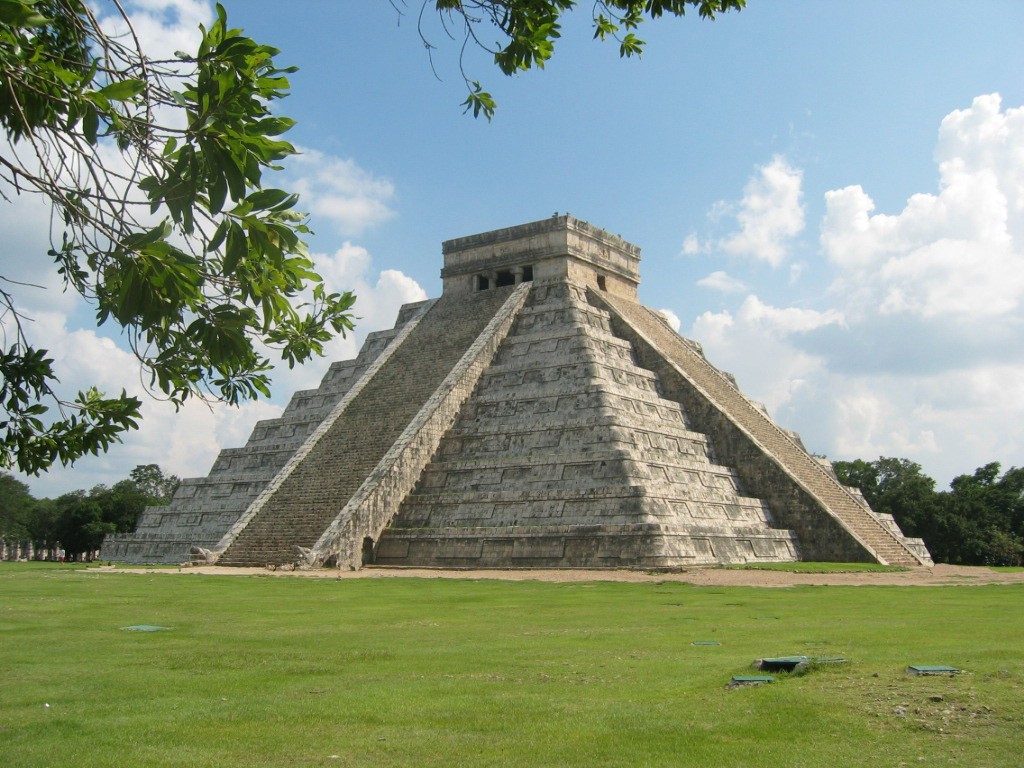
 |
Warm-Up 1.22
|
 |
| Warm-Up 1.23 (Review) |
Inca Civilization
 |
| Warm-Up (Just Period 1) 1.23 |
 |
| 1.23 Inca Text Instruction |
2. Inca Chapter Reading
3. Inca - Master of the Cloud (Video Notes)
BBC: Inca: The Master of the Clouds (Film Link)
Various video resources:
This is were we will be posting some of the videos shown during our warm-up activities.
Aztecs and Human Sacrifice: This video communicates the very visceral process of human sacrifice, when it reached its apex in the Aztec Empire. Historians estimate that Aztecs sacrifices could have been as high as 20,000 people a year. While many respond to such an act and such a number with shock and awe, we discussed whether our own society engages in active or passive forms of brutality to people. Some of the examples passive and active brutality that we explored to balance our perspective on Aztec human sacrifice were: First. 45,000 people a year die from lack of healthcare in the United States; 2. approximately 40,000 people die from gun violence in the US every year; 3. the United States is the largest supplier of weapons in the world; 4. the United States imprisons more people than any country in the world.
History Specials: Coroner's Report - Aztec Sacrifice | History
Aztecs and Human Sacrifice: This video communicates the very visceral process of human sacrifice, when it reached its apex in the Aztec Empire. Historians estimate that Aztecs sacrifices could have been as high as 20,000 people a year. While many respond to such an act and such a number with shock and awe, we discussed whether our own society engages in active or passive forms of brutality to people. Some of the examples passive and active brutality that we explored to balance our perspective on Aztec human sacrifice were: First. 45,000 people a year die from lack of healthcare in the United States; 2. approximately 40,000 people die from gun violence in the US every year; 3. the United States is the largest supplier of weapons in the world; 4. the United States imprisons more people than any country in the world.
History Specials: Coroner's Report - Aztec Sacrifice | History
Nahautl: Nahuatl is one of many indigenous languages of Mesoamerica. In this video you will be able to here the language spoken. I love how this young man is explicit in explaining the importance of maintaining this language and culture. The name Olmec is an Aztec word meaning the rubber people; the Olmec made and traded rubber throughout Mesoamerica.
"Ball Game"/Ulama/Pok ta-Pok: The various styles of a game that includes a rubber ball. Some styles include bouncing it through a hoop, others may emphasize trying to get the ball past the other teams line. This game is seeing a renewed interest by many people in Mexico and other parts of Central and Southern America. The interest is in part owed to attempts to maintain cultural practices that were forbidden by colonial powers (more on colonialism later).
"The Rubber People": The Olmec's took advantage of the native Rubber trees that grew in Mesoamerica. They were able tap the sap/latex and process resources into rubber that could be use to make balls and other goods. This video shows a similar process.

Olmec Masks: Masks that weren't necessarily meant to worn by people, but were meant to depict supernatural beings or deities. Carved from jade, Museum description of Olmec Mask
Following our activity, I introduced a really interesting theory that some scholars have used to explain some of the facial characteristics of these masks and other artifacts (see Jaguar Cult – Down’s Syndrome – Were Jaguar)

Olmec Masks: Masks that weren't necessarily meant to worn by people, but were meant to depict supernatural beings or deities. Carved from jade, Museum description of Olmec Mask
Following our activity, I introduced a really interesting theory that some scholars have used to explain some of the facial characteristics of these masks and other artifacts (see Jaguar Cult – Down’s Syndrome – Were Jaguar)
